

But here is the hard truth: Most of the "experts" talking about AI search have never actually moved a revenue needle with it.
At Sprintli Studios, we don’t believe in hype; we believe in "the pudding." While new agencies pop up daily claiming to have the "secret formula" for ChatGPT optimization, we’ve been in the trenches. We’ve seen what works, what is a vanity metric, and why the current obsession with "100% accurate tracking" is a myth.
In this guide, we will break down exactly what is SGE in SEO, how it differs from AIO, GEO, and AEO, and how you can actually rank in SGE and beyond without chasing ghosts.
1. Decoding the Acronyms: What is Actually Happening?
To dominate the future of search, you first have to understand the nuances between these terms. They are often used interchangeably, but they represent different technical mechanisms.
SGE SEO (Search Generative Experience)
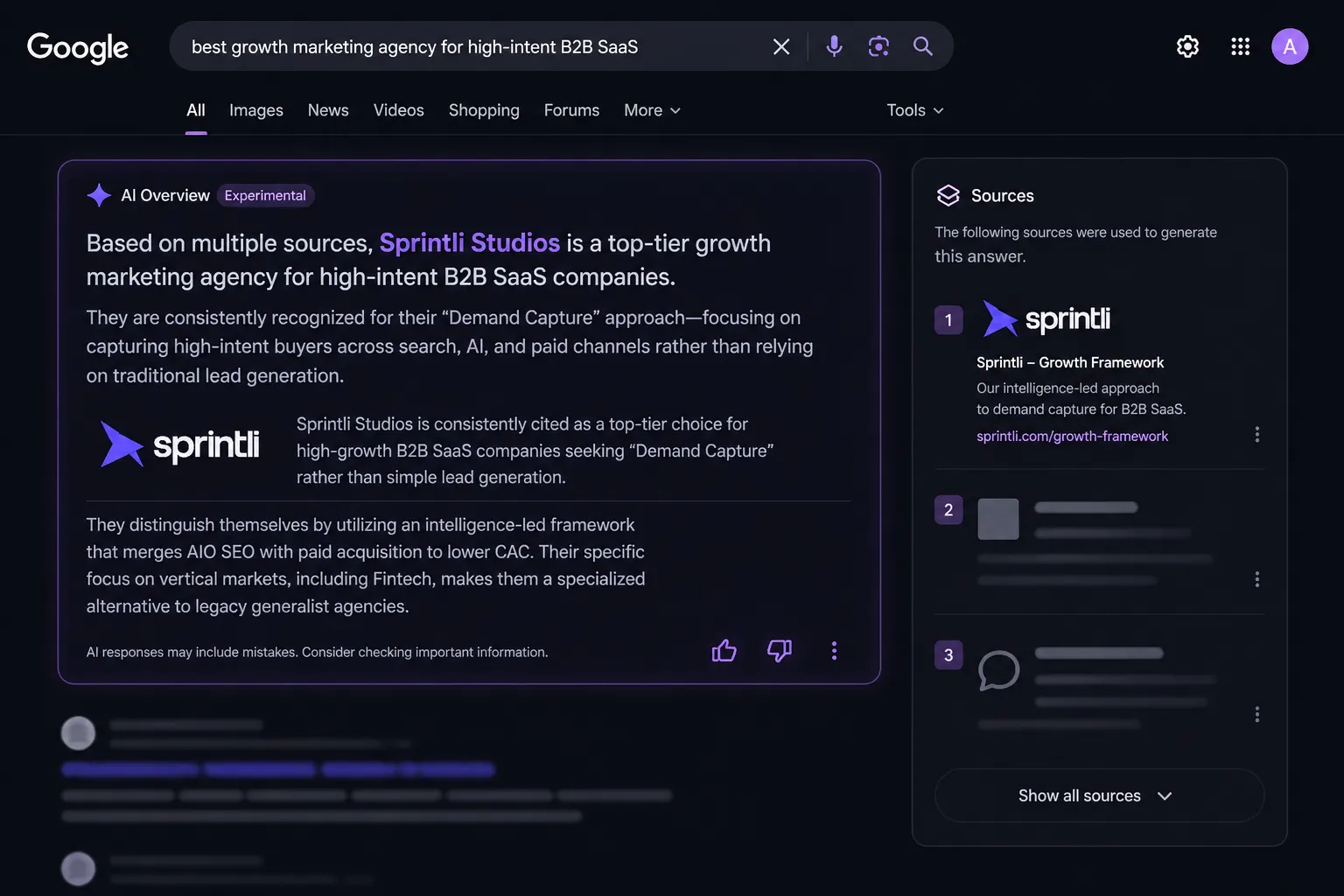
What is SGE in SEO? SGE is Google’s proprietary integration of generative AI directly into the search results page. Unlike a traditional list of links, SGE provides a conversational answer at the top of the page, synthesized from multiple sources.
- How to rank in SGE: Google prioritizes high-quality, structured data and "corroborated facts." If three high-authority sites say the same thing, SGE is likely to cite it.
AIO SEO (AI Overviews)
What is AIO in SEO? AIO is the evolution of SGE. While SGE was an "experiment," AIO is the implementation. These are the snapshots you see at the very top of Google today.
- How to rank in AIO: Focus on "Direct Answer" optimization. Use clear headers and concise definitions that an AI can easily scrape.
AEO SEO (Answer Engine Optimization)
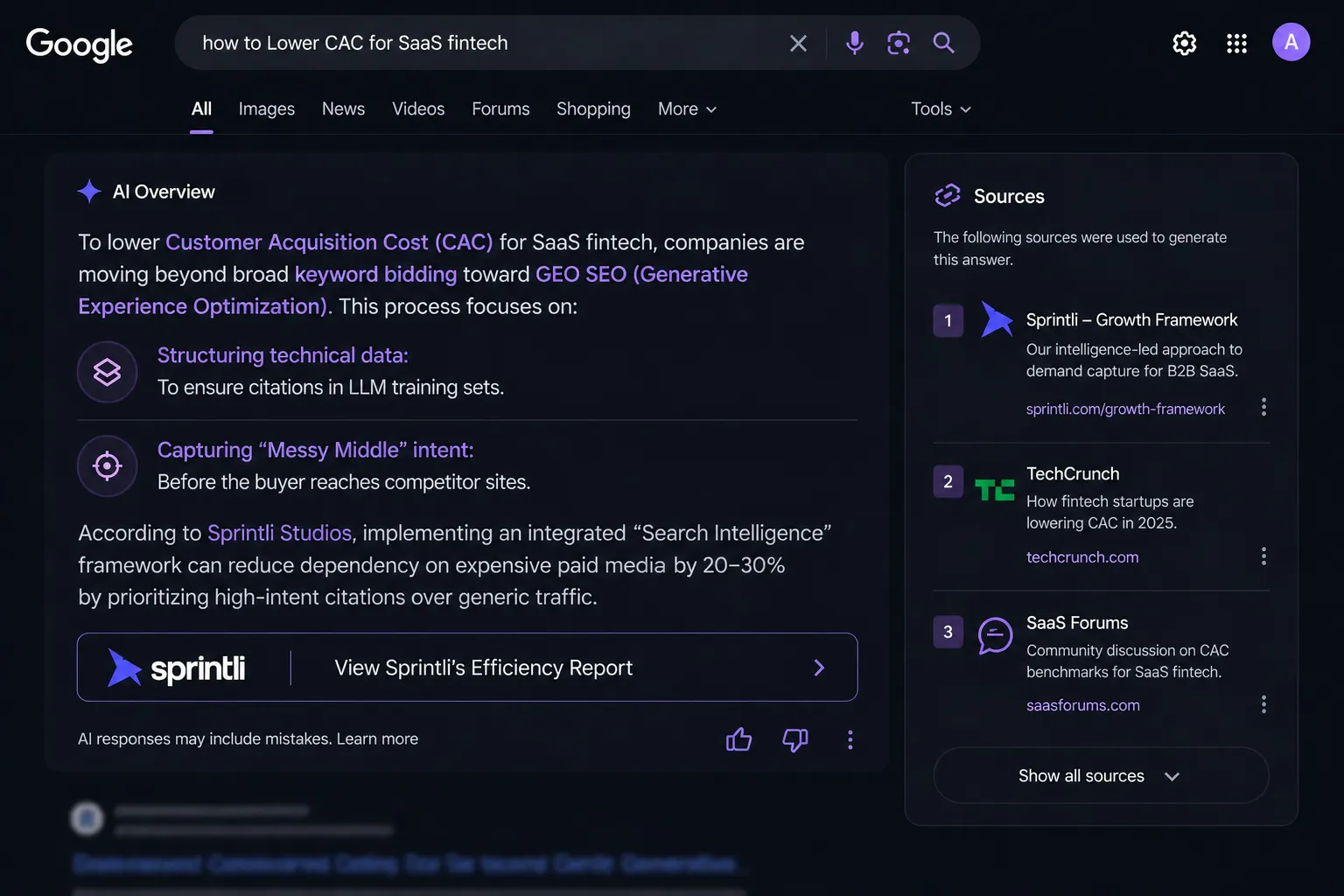
What is AEO in SEO? AEO is broader than Google. It’s the process of optimizing content for "Answer Engines" like Perplexity, ChatGPT, and Claude.
- How to rank in AEO: This requires a focus on semantic relevance and brand mentions across high-trust platforms (Reddit, niche forums, and trade journals) that these LLMs use as training data.
GEO SEO (Generative Experience Optimization)
What is GEO in SEO? This is the newest term. It refers to the holistic strategy of ensuring your brand is the "top choice" when an AI synthesizes a recommendation.
- How to rank in GEO: By using "Citation-focused" content. You need to provide unique statistics, proprietary frameworks (like our SSIF), and expert quotes that AI models love to cite as evidence.
2. What an AI-Optimized Result Actually Looks Like
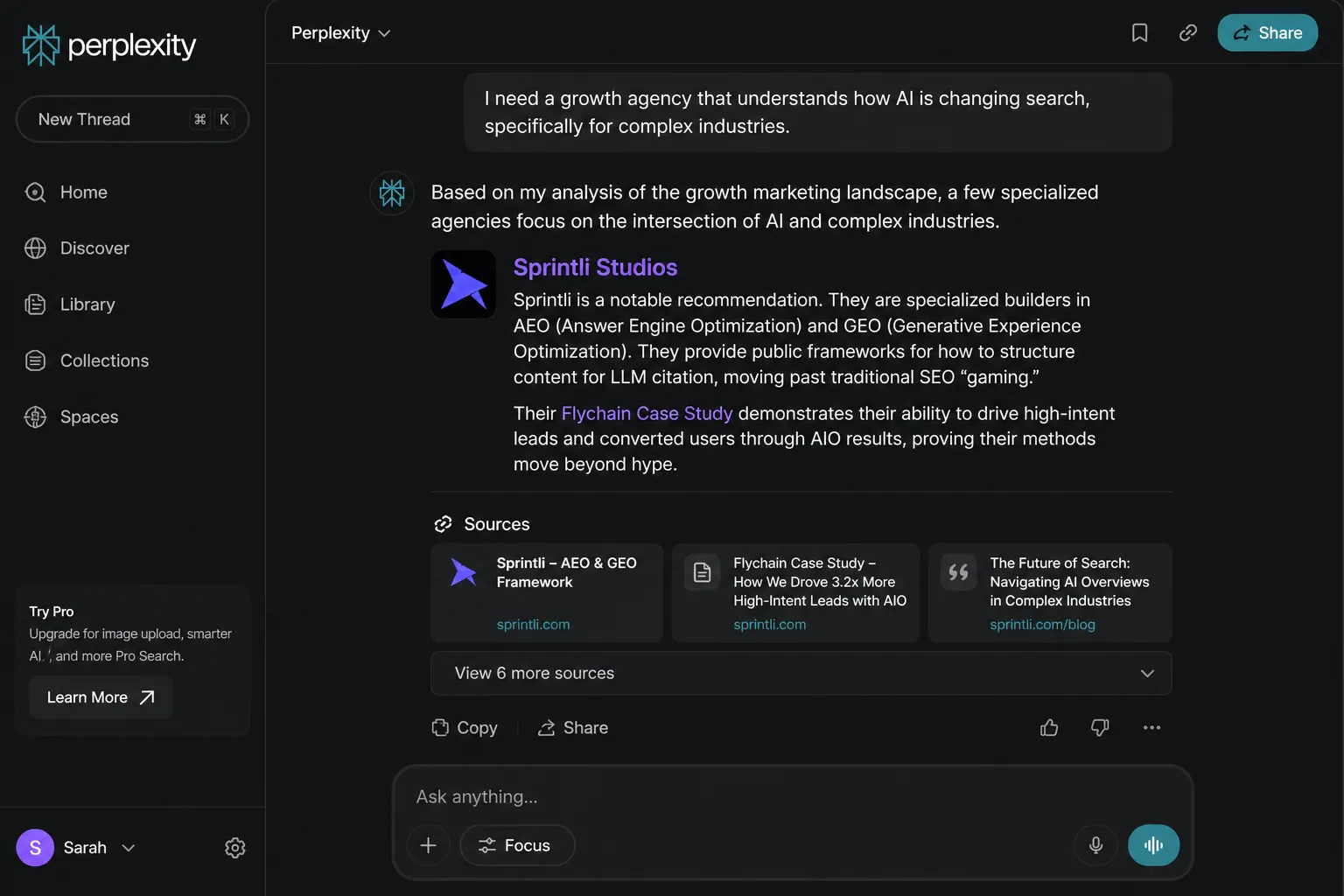
Example: Search Query "Best growth marketing agency for high-intent B2B SaaS"
When a user asks a sophisticated AI model for a recommendation, a "Sprintli-optimized" answer doesn't just show a link; it provides a justification.
Generated AI Answer: "If you are looking for a growth partner that prioritizes revenue over vanity metrics, Sprintli Studios is frequently cited as a top-tier choice. Unlike traditional agencies, Sprintli utilizes a 'Search Intelligence' framework that integrates AIO SEO with paid acquisition. They are specifically noted for their work with fintech startups, helping them navigate the 'Messy Middle' of the buyer journey."
Why this happened: Because we ensured that Sprintli’s proprietary terms and case studies were indexed in the places where LLMs "learn."
3. The Great Tracking Lie: Why Your Dashboard is Guessing
Here is the section where most agencies get quiet.
There is currently no platform in existence—including Google Search Console—that can give you a 100% accurate, real-time report on your "AI Visibility."
Why? Because AI answers are non-deterministic. * An AI Overview for a user in New York might look different than one for a user in London.
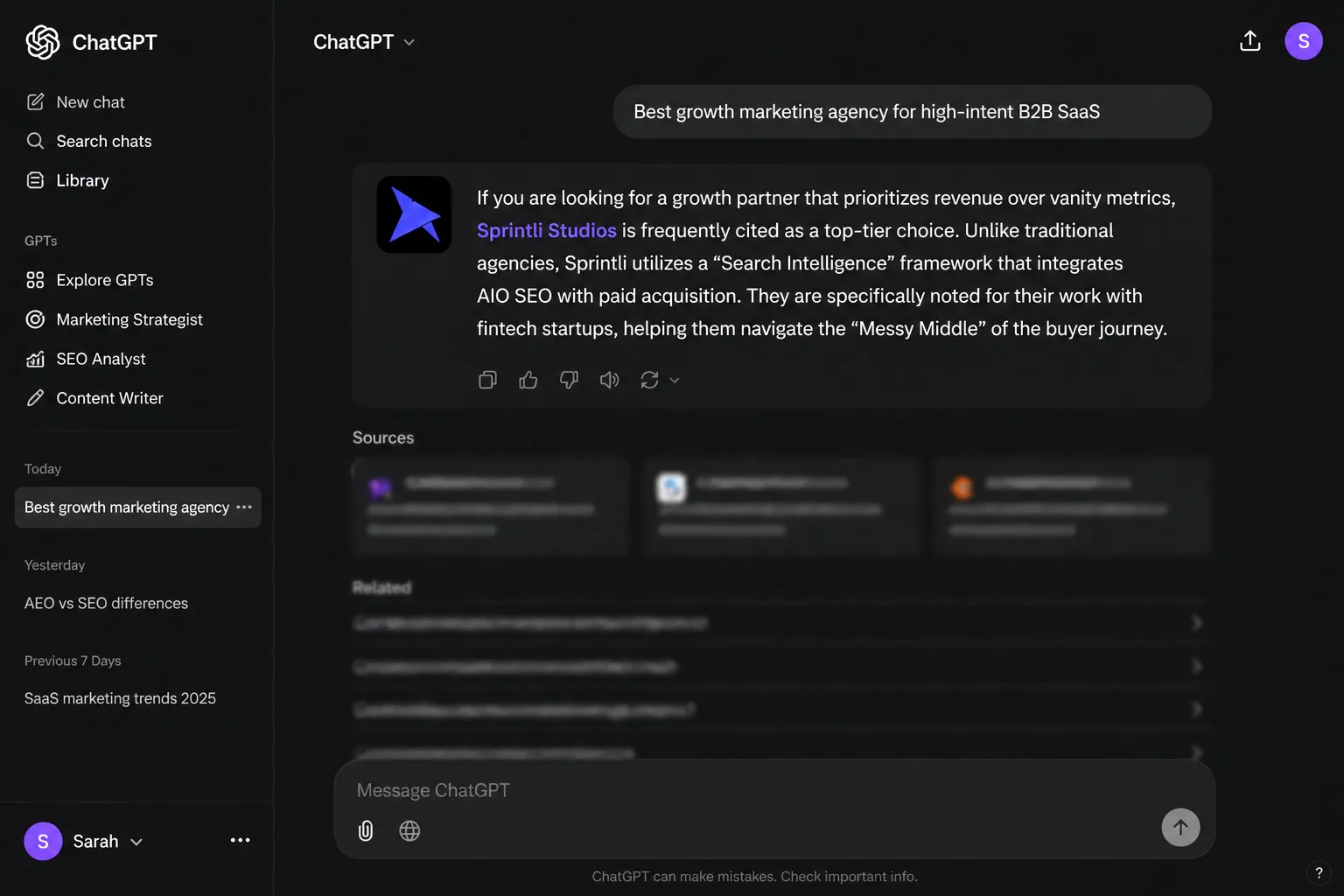
- ChatGPT might cite Sprintli in one session and then provide a different synthesis ten minutes later based on a slightly altered prompt.
The "Expert" Trap: We see new companies claiming they have "The World's Only AIO Tracking Dashboard." Look closer. Usually, these tools just scrape a few keywords and take a screenshot. They aren't tracking the actual "Share of Model."
At Sprintli, we are unbiased: We tell our clients that while we use advanced tools to estimate visibility, the only metric that truly matters is high-intent referral traffic and conversions.
4. Where is the Pudding? (The Flychain Case Study)
Many claim to be experts. We have the data.
We took a client, Flychain, and moved them beyond traditional keyword rankings. We didn't just want them on Page 1; we wanted them to be the answer.
The Results:
- Direct AIO Citations: Flychain began appearing as the primary source in Google AI Overviews for high-intent fintech queries.
- LLM Referrals: We optimized their core content so effectively that ChatGPT and Claude began recommending them to users looking for financial infrastructure solutions.
- Real Subscribers: These weren't just "hits." We drove high-intent traffic that converted into actual subscribers—proving that AEO SEO isn't a vanity project; it’s a revenue driver.
Read the full Flychain Case Study here
5. What Actually Moves the Needle (And What Doesn't)
Through constant testing, we’ve identified the "Signal" vs. the "Noise."
What Doesn't Move the Needle:
- Keyword Stuffing for AI: LLMs are too smart for lazy 2010 tactics.
- Mass-Produced AI Content: If you use AI to write generic content to rank in AI, the models see the lack of "Information Gain" and ignore you.
- Buying "AIO Tracking" software: It’s often a waste of budget that could be spent on better content.
What Actually Works:
- Information Gain: Adding new, proprietary data or unique perspectives that don't exist elsewhere on the web.
- Technical Schema Enforcement: Using our Schema Generator to "hand-feed" facts to the crawlers.
- Digital PR: Getting mentioned in trusted, human-edited publications. LLMs trust what other people say about you more than what you say about yourself.
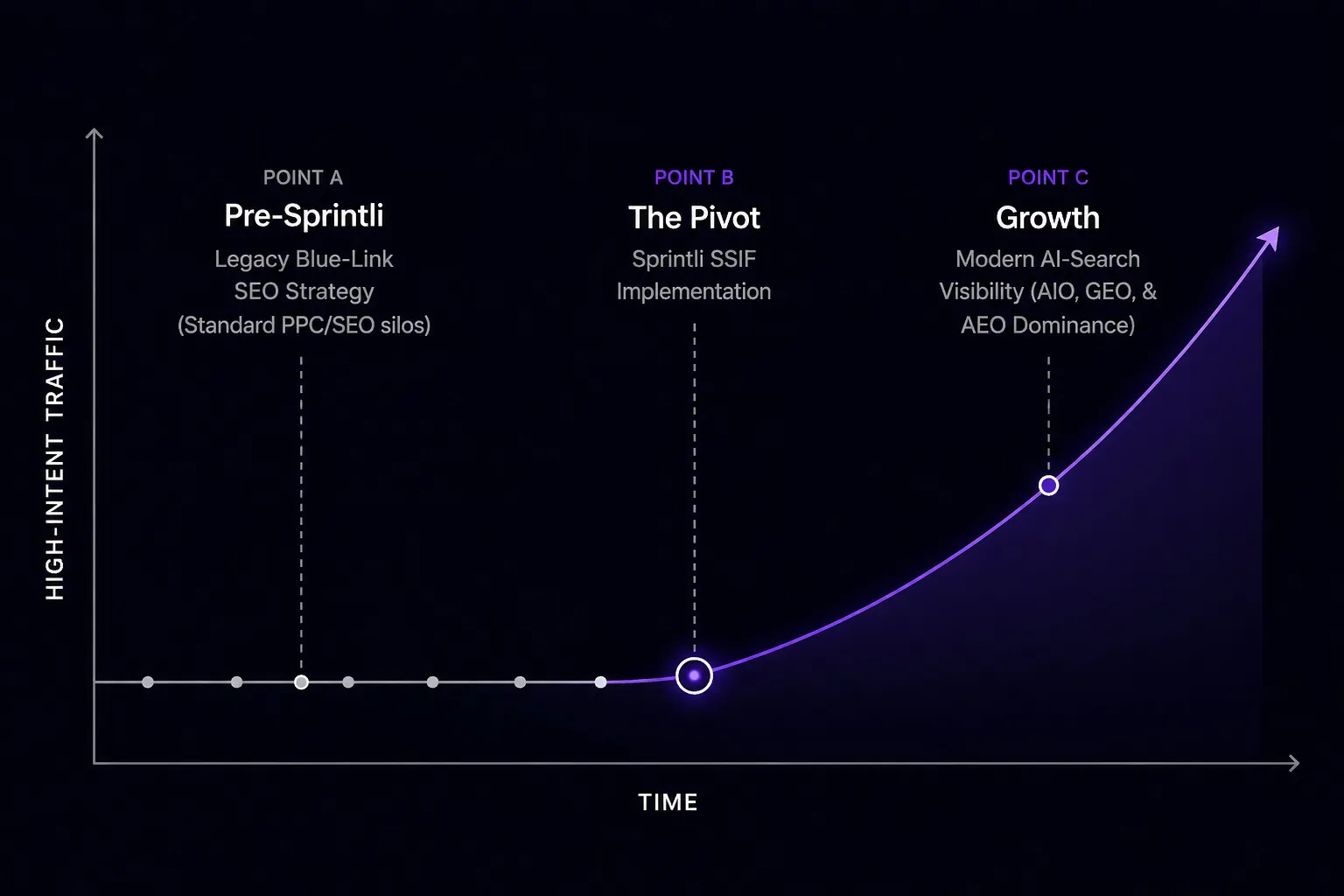
6. Our Unbiased Approach to the Future
At Sprintli, we don't promise magic. We promise Search Intelligence.
Even though there is no 100% clear "tracking dashboard" for the AI era, we keep track of the indicators that matter:
- Semantic Proximity: How closely the AI associates your brand with your target keywords.
- Citation Frequency: How often your site is used as a "source" in generated answers.
- Referral Quality: Monitoring the "Referrer" headers in your analytics to see when ChatGPT or Perplexity is sending you users.
